artwork by Gemini 3 Pro (Nano Banana Pro)
From Hand-Drawn to AI-Enhanced: Building a Mind Map Digitization Workflow
Mind maps capture thought in a way linear notes cannot, but hand-drawn maps remain trapped on paper, unsearchable and hard to share. In this article, we explore a workflow that transforms hand-drawn mind maps into AI-enhanced digital visualizations while preserving their organic structure. Using Claude Code as orchestrator and Nano Banana Pro for image generation, we have digitized over 80 mind maps into a consistent illuminated manuscript style.
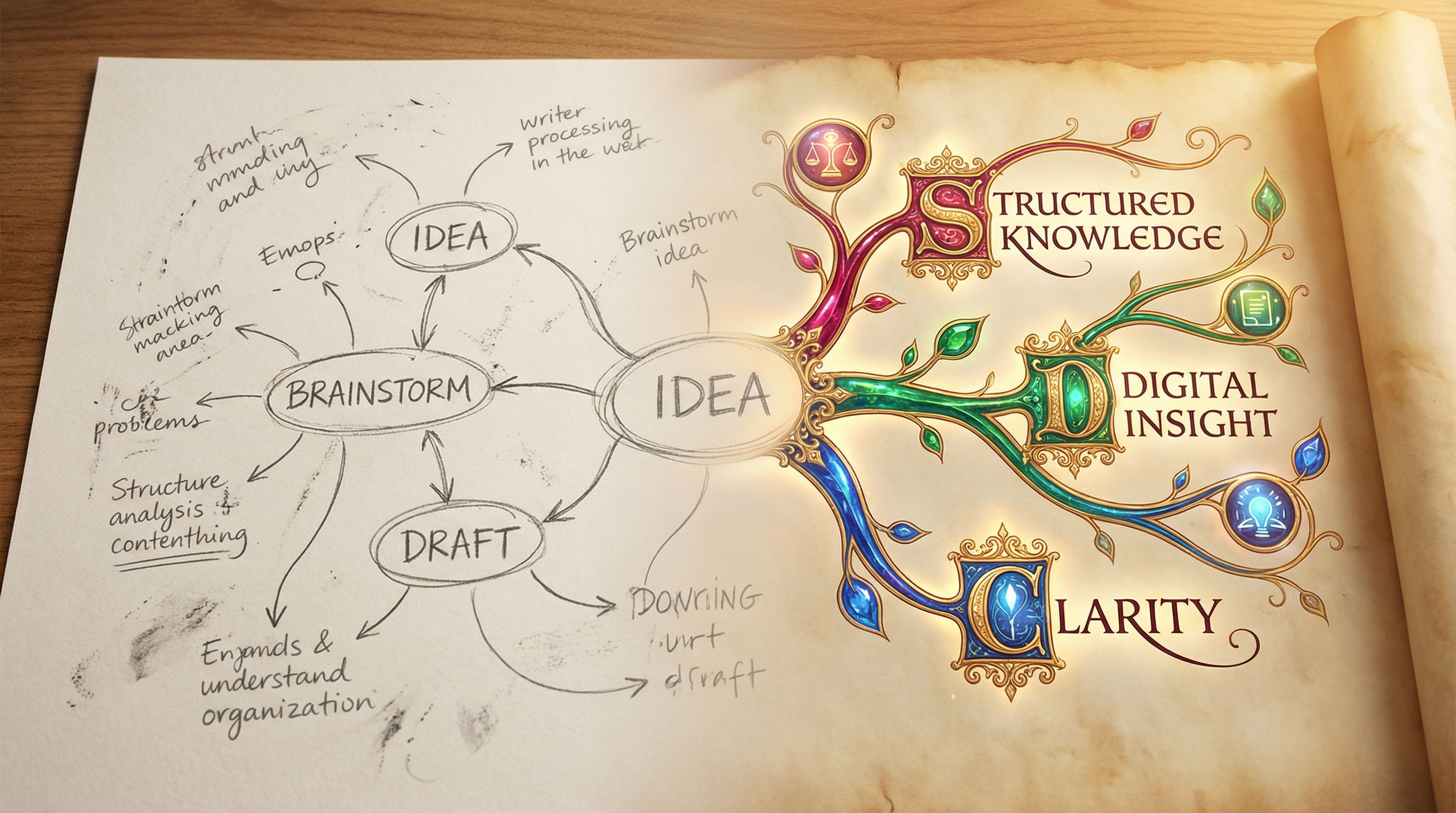
Figure. The transformation from hand-drawn sketch to illuminated manuscript style visualization.
Why Mind Mapping Matters
Visual thinking activates spatial reasoning in ways that linear note-taking cannot [1]. When we draw a mind map, we engage with ideas differently. The central concept sits at the heart, branches radiate outward, and relationships emerge through proximity and connection. This spatial arrangement mirrors how our minds actually work, making complex topics easier to grasp and remember.
For years, we have accumulated hand-drawn mind maps, each one capturing a moment of learning or insight. Philosophy lectures, technical architectures, book summaries, project plans. Over 80 maps spanning topics from temporal logic to blockchain fundamentals. Each one represents genuine understanding, the kind that comes from actively processing information rather than passively recording it.
But hand-drawn mind maps have limitations:
- Illegible to others: My handwriting and hand-drawn graphics are not readable to anyone but myself
- Unsearchable: Finding a specific concept means flipping through stacks of paper
- Hard to share: Physical artifacts do not travel well, and even scanned images remain cryptic
- Static: Once drawn, they cannot evolve without redrawing
- Fragile: Paper degrades, gets lost, or becomes damaged
The challenge was clear: how do we preserve the organic, creative nature of hand-drawn maps while gaining the benefits of digital storage, searchability, and shareability?
The Vision: Illuminated Manuscripts Meet Modern AI
Rather than simply scanning mind maps into static images, we envisioned something more ambitious. What if AI could transform rough sketches into beautiful, consistent visualizations while preserving every concept and relationship from the original?
The result is what we call the “illuminated manuscript” style, a visual aesthetic that combines:
- Aged parchment backgrounds with warm beige tones
- Color-coded organic branches radiating from central concepts
- Topical icons at the center node (brains for AI topics, maps for spatial reasoning, etc.)
- Clean typography replacing handwriting while maintaining readability
- Rich illustrative elements throughout (symbols, diagrams, visual metaphors)
This style balances classical elegance with modern clarity. The mind maps become not just functional reference documents but genuinely beautiful artifacts.
Two Workflows for Different Needs
We developed two complementary workflows within our Personal AI Infrastructure (PAI) [3], each addressing a different starting point.
TranslateMindMap: From Hand-Drawn to Digital
This workflow takes an existing hand-drawn mind map image and transforms it into a structured digital note with an AI-enhanced visualization.
The process:
Original Image → Copy to images/ → Generate Nano → Analyze Nano → Create Note
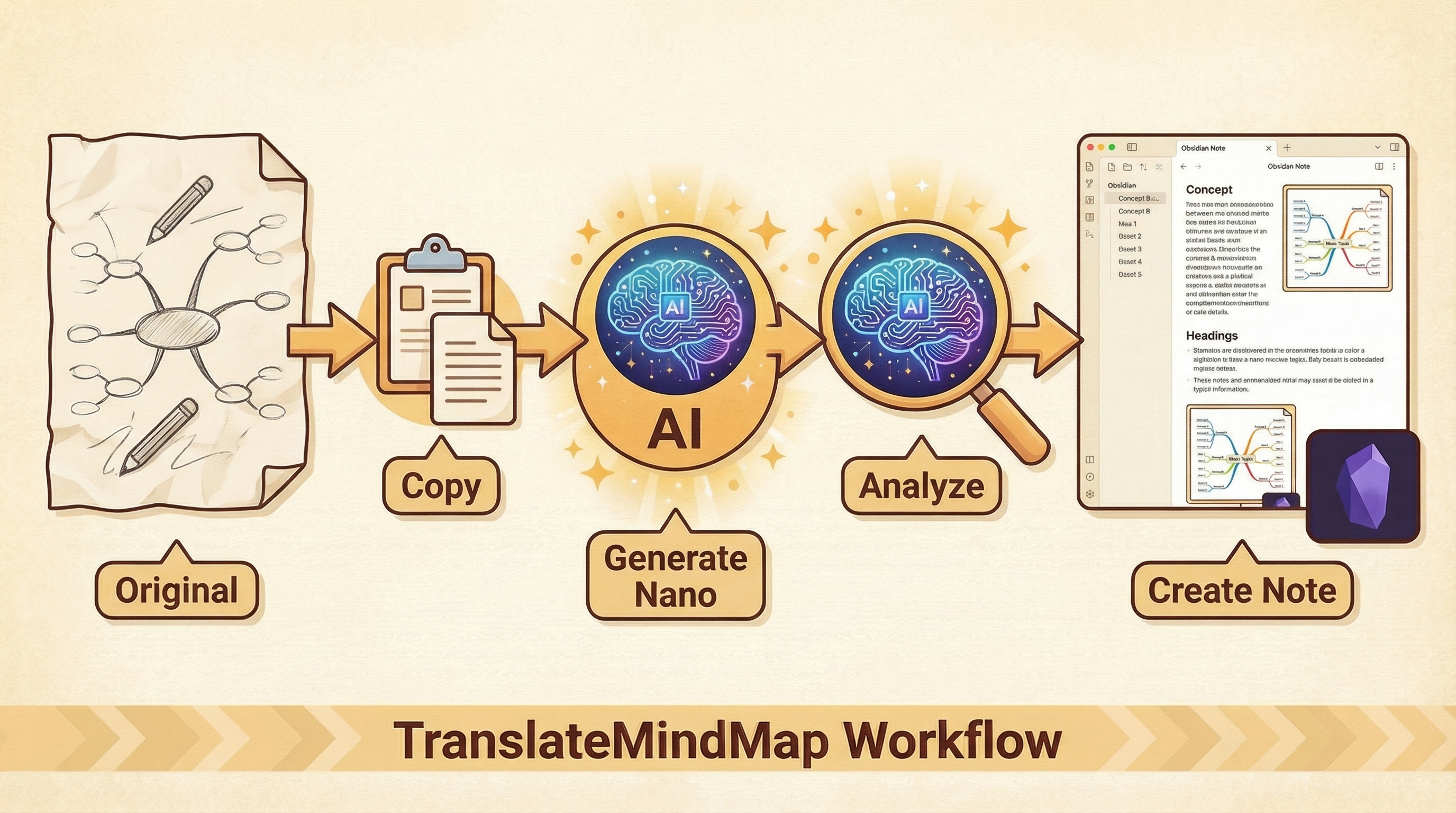
Figure. The TranslateMindMap workflow transforms hand-drawn mind maps into structured digital notes with AI-enhanced visualizations.
The key insight came during development: we analyze the AI-generated “Nano” version rather than the original. Why? The enhanced version has cleaner lines, standardized typography, and better contrast, making it easier for AI to extract the semantic structure accurately.
Technical components:
| Component | Role |
|---|---|
| Claude Code [2] | Orchestrates the entire workflow |
| Nano Banana Pro [4] | Advanced image generation model |
| Style Reference | Existing Nano image ensures visual consistency |
| Obsidian [5] | Final destination for structured markdown notes |
GenerateMindMap: From Content to Visual
Sometimes we want to create a new mind map from existing content rather than digitizing a hand-drawn one. This workflow accepts text, URLs, files, or structured outlines and generates both a visualization and a structured note.
Input types supported:
- Text: Paste content directly for quick transformation
- URL: Fetch and analyze web articles
- File: Process existing markdown or text documents
- Outline: Provide explicit structure for precise control
The process:
Content → Extract Structure → Build Prompt → Generate Nano → Create Note
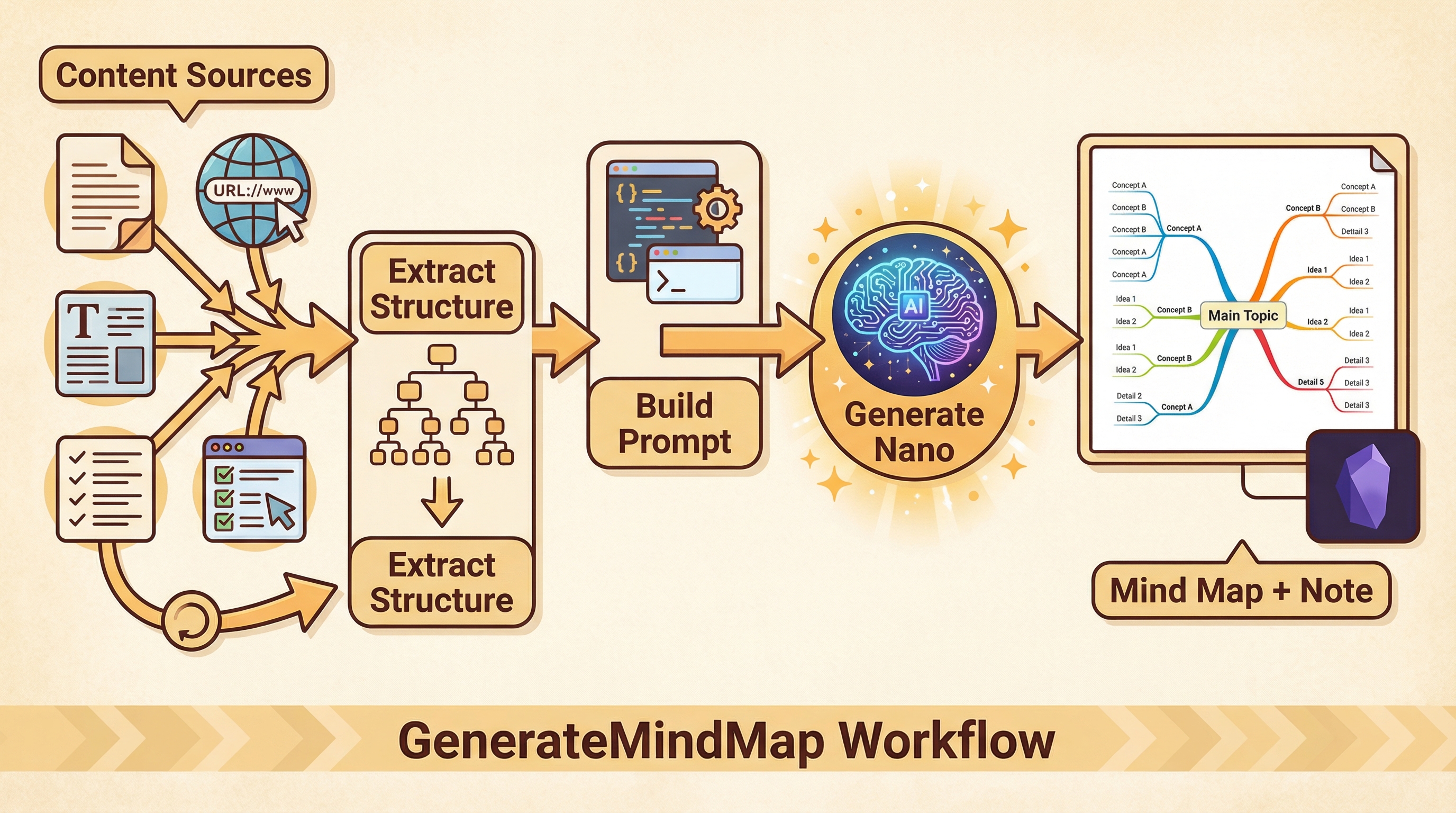
Figure. The GenerateMindMap workflow creates new mind maps from text, URLs, files, or structured outlines.
This workflow is particularly useful for synthesizing research, planning projects, or creating visual summaries of dense material.
The Art of Prompt Engineering
Generating consistent, high-quality mind map visualizations requires careful prompt engineering. Through experimentation, we developed a template that reliably produces the illuminated manuscript aesthetic.
Critical constraints:
- Layout Preservation: The AI must maintain the exact spatial arrangement of branches from the original
- Content Fidelity: Every term, formula, and relationship must appear in the output
- Visual Consistency: New generations must match the established style
Color coding by theme:
| Branch Theme | Color Palette |
|---|---|
| Logic/Math | Blue gradients |
| Philosophy | Purple/Violet |
| Technical/Code | Teal/Cyan |
| Business/Process | Coral/Orange |
| Data/Hierarchy | Green, rainbow levels |
The style reference system ensures consistency across all 80+ mind maps. By providing a canonical example alongside each generation request, the AI produces visually coherent results that feel part of a unified collection.
Showcase: Before and After
The best way to understand the transformation is to see it. Here are four examples from our collection, showing original hand-drawn maps alongside their AI-enhanced versions.
Example 1: Temporal Logic
This mind map captures concepts from a lecture on temporal logic, including operators for past and future, temporal frames, and the semantics of how truth values change over time.
Original (Hand-drawn):
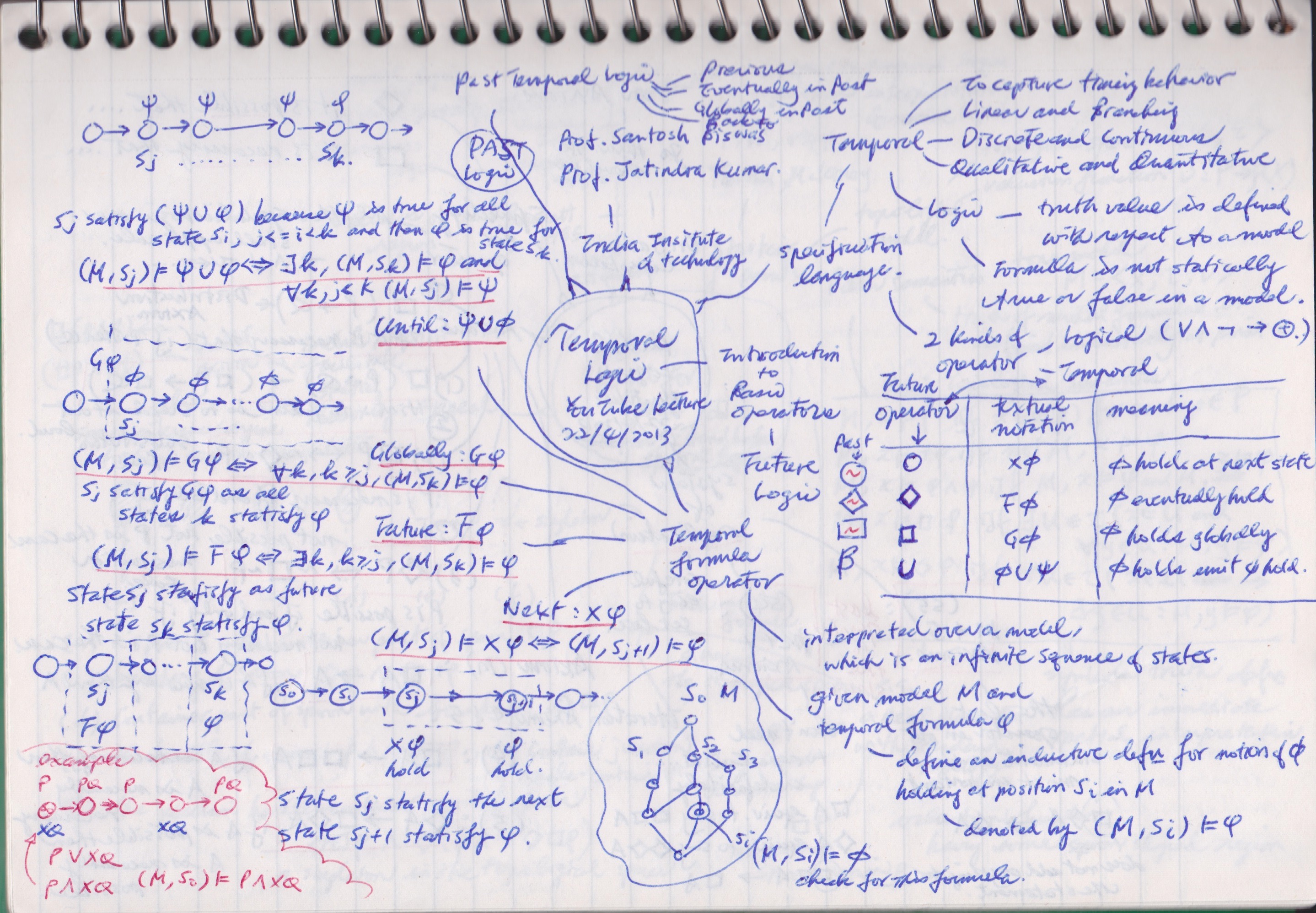
Figure. Hand-drawn mind map from a temporal logic lecture, 2013.
AI-Enhanced (Nano):
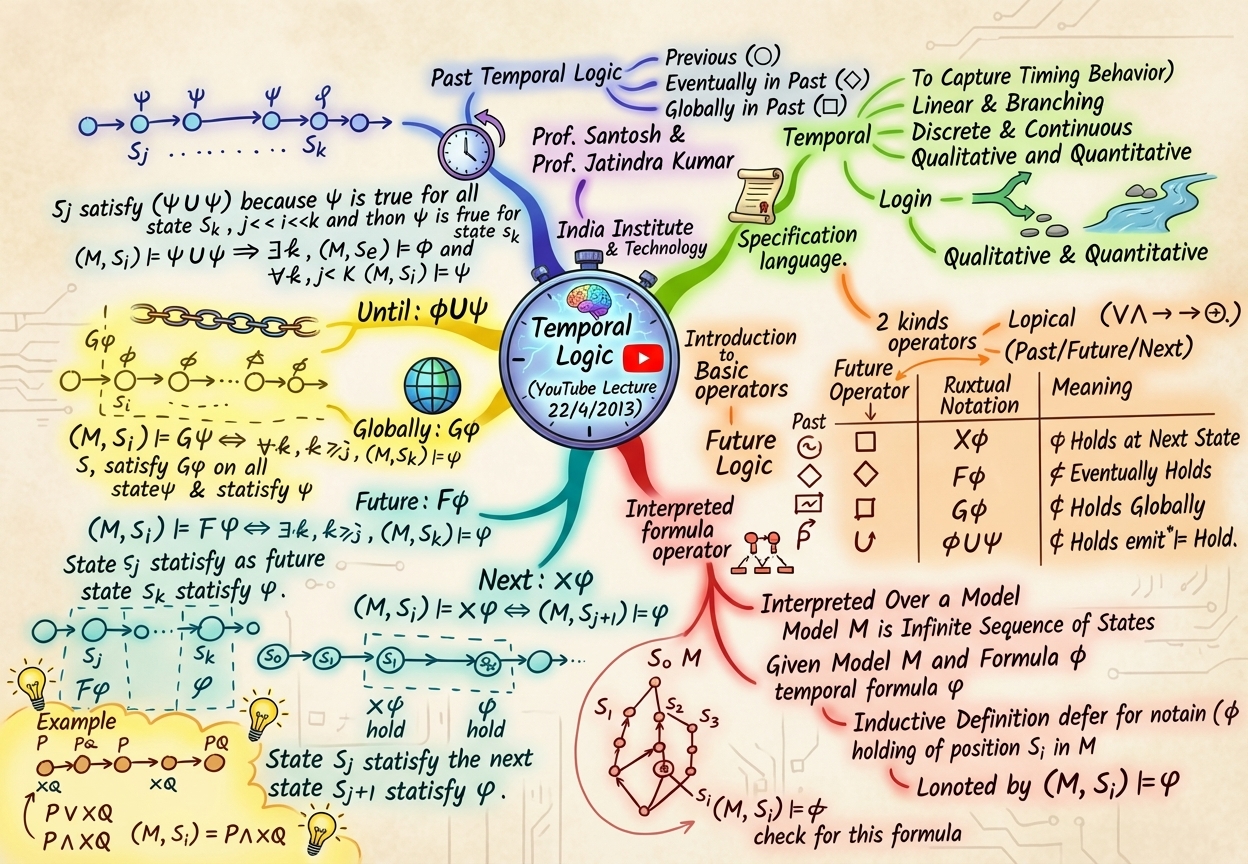
Figure. AI-enhanced version with illuminated manuscript style. Note the preserved mathematical notation and branch structure.
The transformation preserves the complex relationships between temporal operators while making the content significantly more readable. Mathematical formulas like (M, Si) |= Φ remain accurate, and the color coding helps distinguish between past logic (one branch) and future logic (another).
Example 2: Expert Systems
A technical mind map covering rule-based expert systems, inference engines, and knowledge representation.
Original (Hand-drawn):
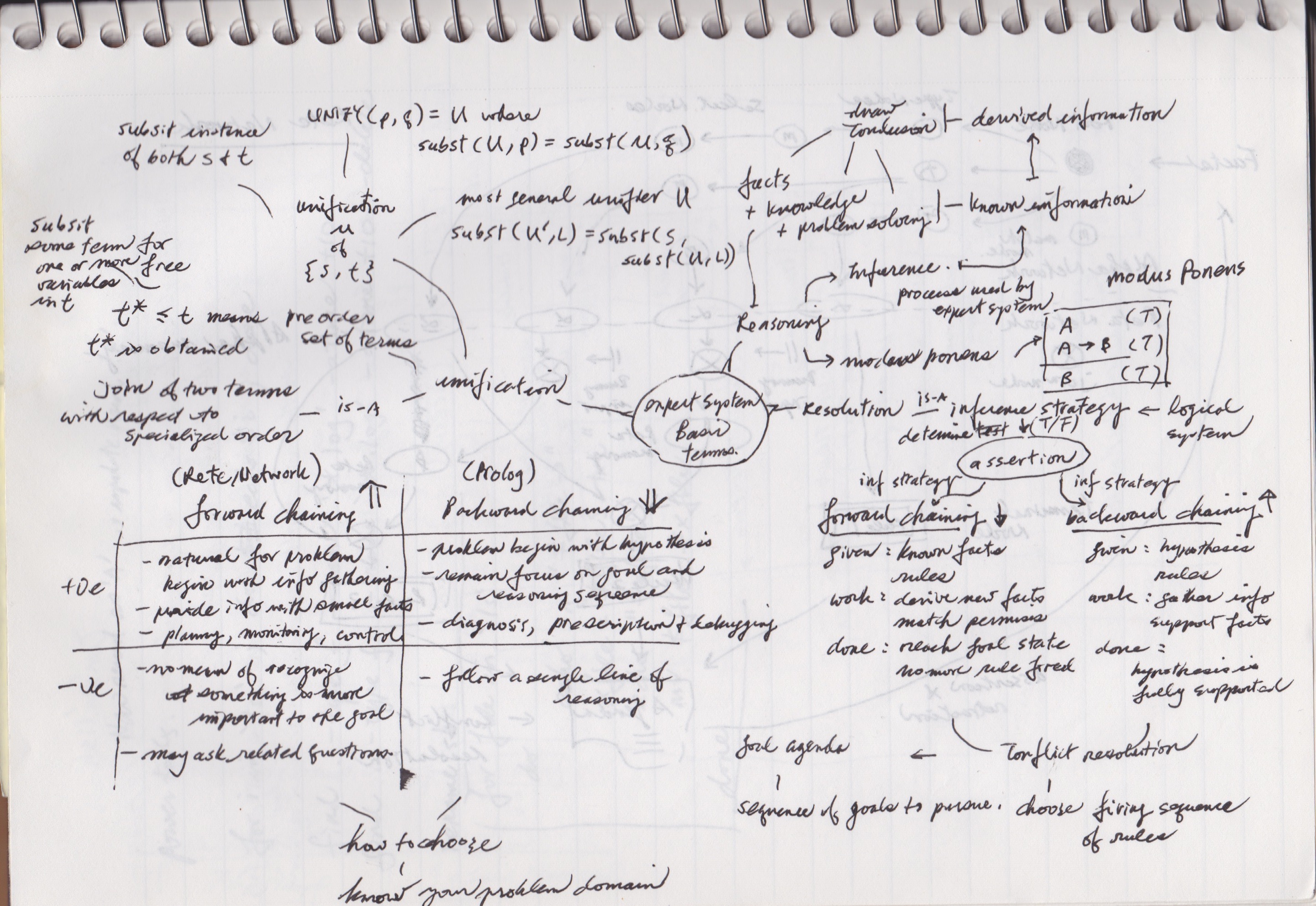
Figure. Expert system architecture captured during study.
AI-Enhanced (Nano):
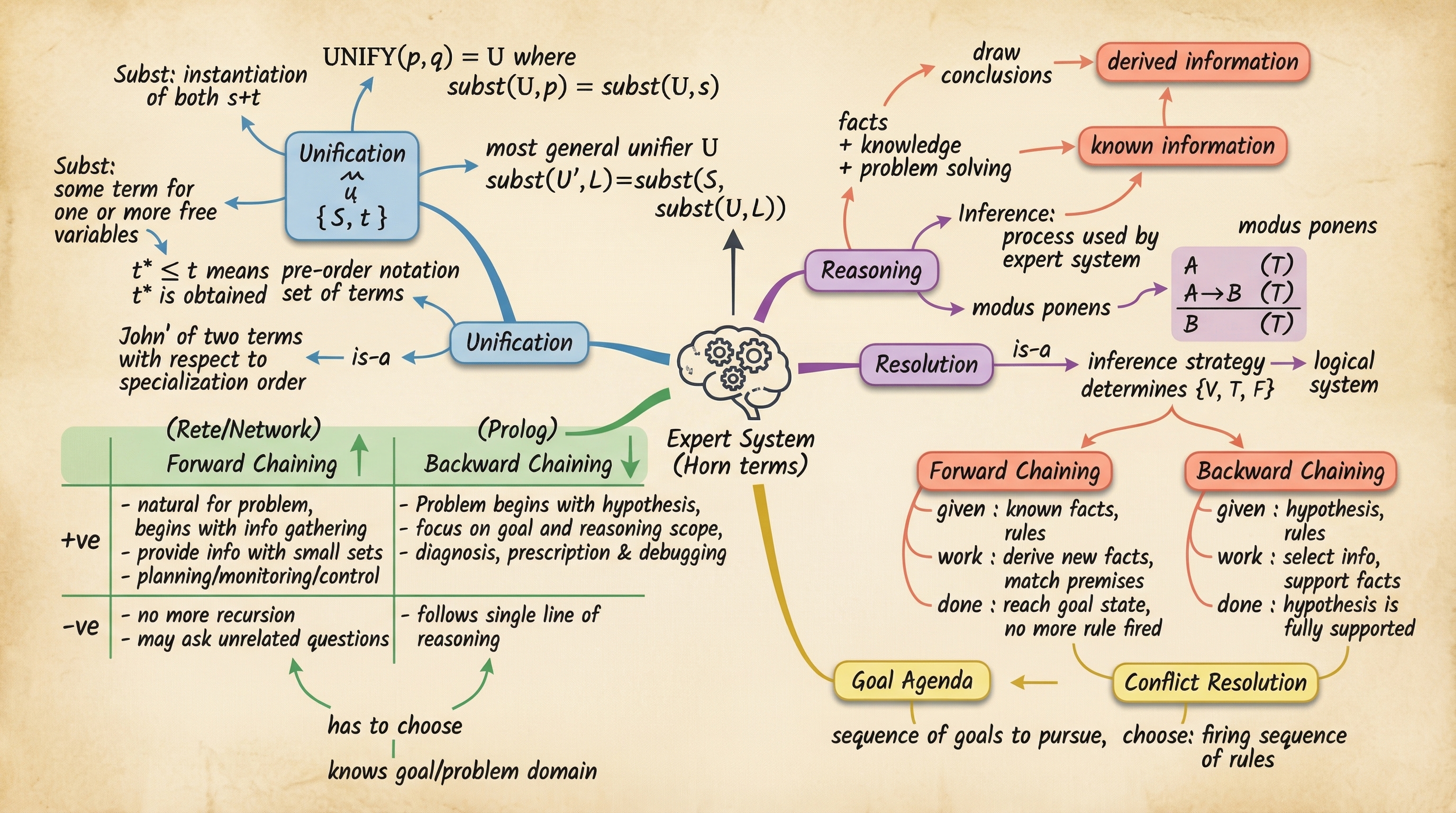
Figure. Enhanced version showing inference engine components, rule structures, and knowledge base relationships.
This example demonstrates how the workflow handles technical content. The Rete network diagram, production rules, and forward/backward chaining concepts all survive the transformation with improved clarity.
Example 3: Blockchain - The Truth Machine
A mind map summarizing key concepts from blockchain technology, focusing on trust, decentralization, and consensus mechanisms.
Original (Hand-drawn):
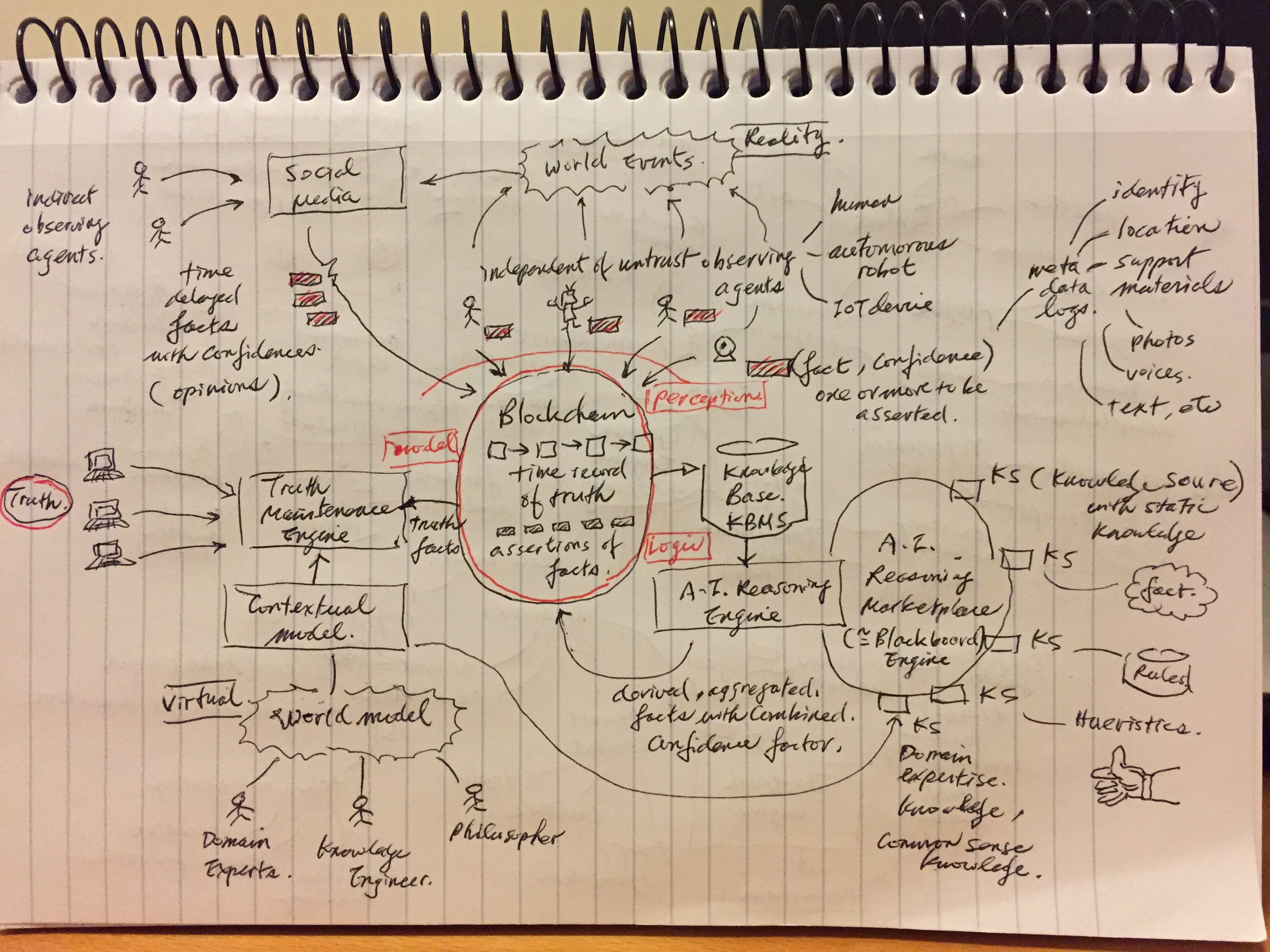
Figure. Mind map from studying blockchain fundamentals.
AI-Enhanced (Nano):
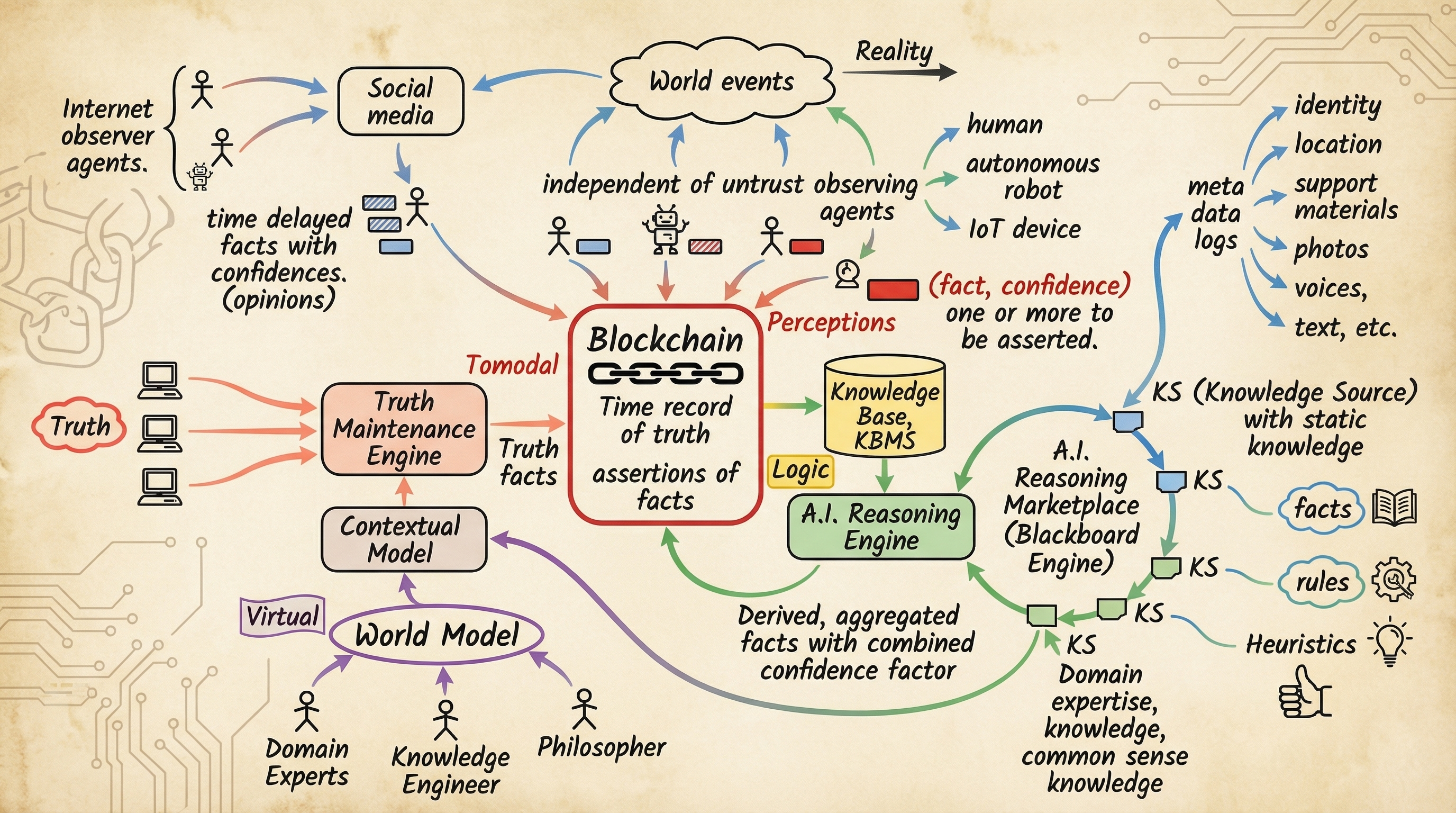
Figure. The enhanced version brings out the interconnected nature of blockchain concepts with vibrant visual hierarchy.
The blockchain mind map shows how the illuminated manuscript style handles business and technical hybrid content. Concepts like “trustless systems,” “immutable ledger,” and “smart contracts” gain visual prominence through thoughtful color coding and iconography.
Example 4: First Mind Map
This holds special significance as one of the earliest mind maps in the collection, capturing the initial exploration of mind mapping as a technique.
Original (Hand-drawn):
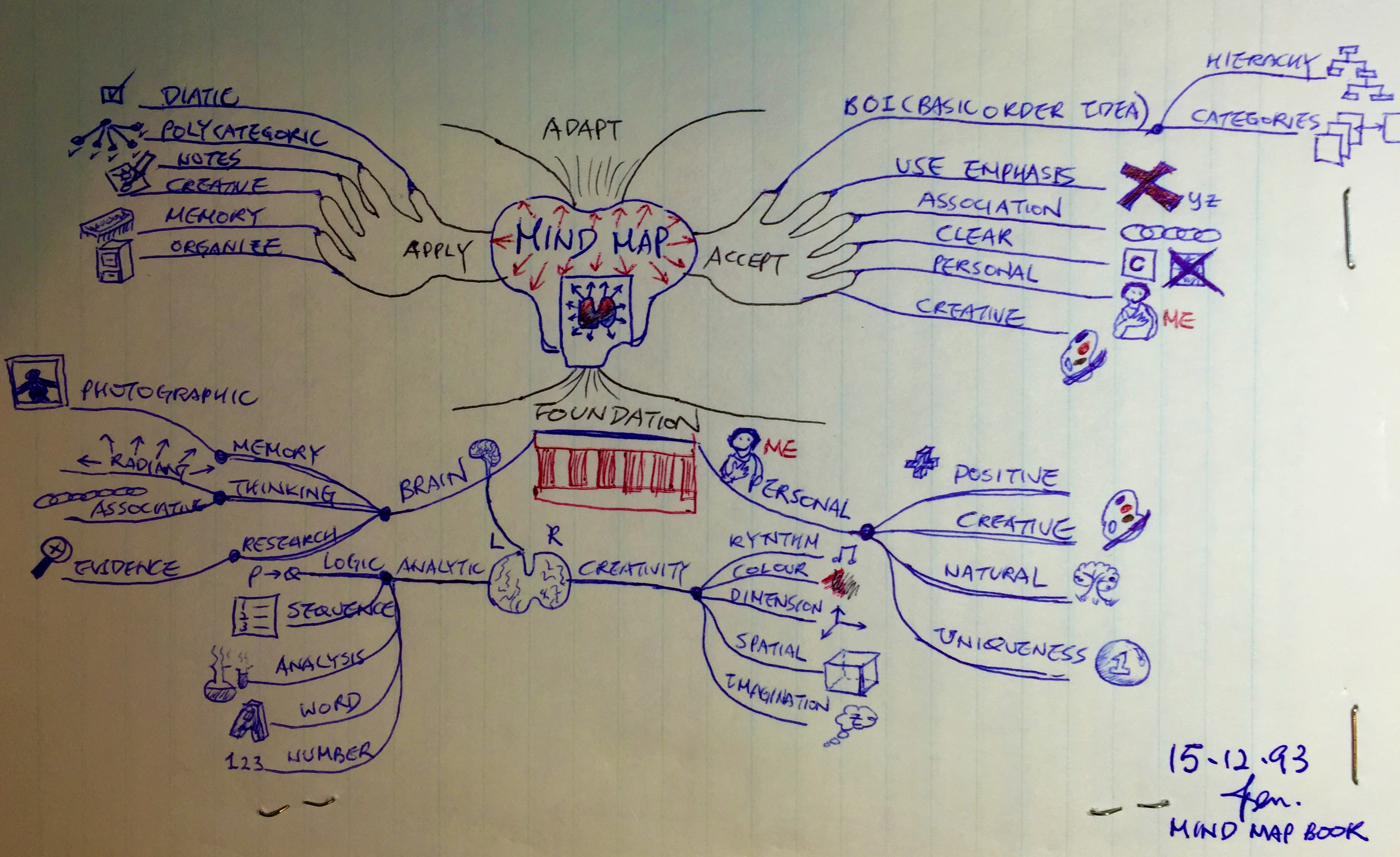
Figure. One of the first hand-drawn mind maps, exploring the technique itself.
AI-Enhanced (Nano):
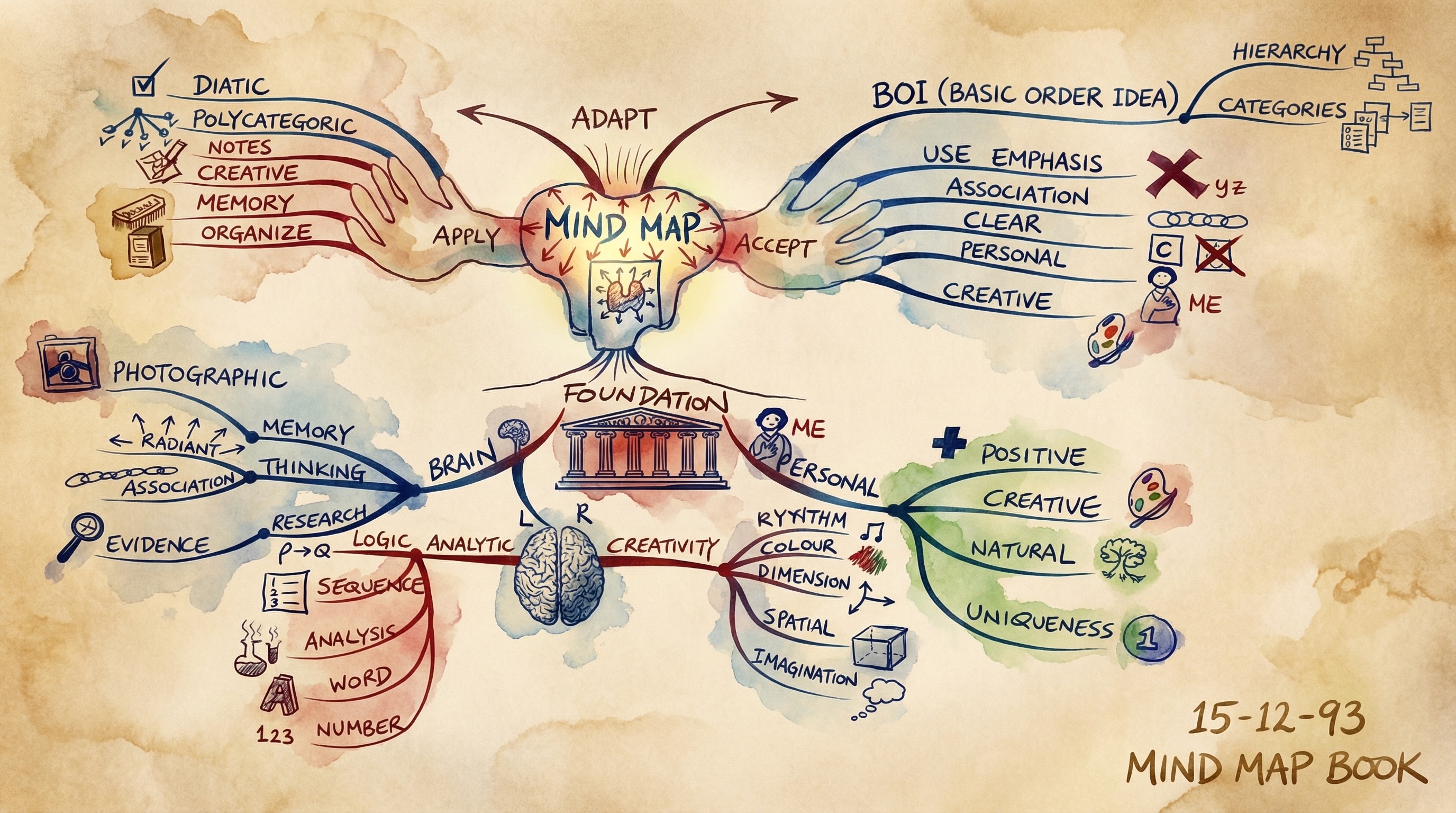
Figure. The transformation brings new life to an early exploration while preserving its original spirit.
Seeing early work transformed alongside recent maps creates a sense of continuity. The collection becomes a living archive of intellectual development.
The Structured Output
Each mind map generates not just an image but a complete Obsidian note with:
- YAML frontmatter with tags, creation date, and metadata
- Both images embedded (original and Nano for TranslateMindMap; Nano only for GenerateMindMap)
- Numbered sections corresponding to major branches
- Key terms in bold with explanations
- Related notes linking to connected topics
This structure makes the mind maps searchable, linkable, and integrated with the broader knowledge base. A search for “temporal operators” now surfaces not just the note but the specific section discussing that concept.
Lessons Learned
Building this workflow taught us several valuable lessons:
1. Analyze the enhanced version, not the original
Counter-intuitively, the AI-generated Nano image is easier to analyze than the hand-drawn original. Clean lines and standardized typography make semantic extraction more reliable.
2. Aspect ratio matters
We initially generated square (1:1) images, but mind maps naturally expand horizontally. Switching to 16:9 dramatically improved the visual balance and made branches more readable.
3. Style references create consistency
Without a reference image, each generation produced a different visual style. By providing a canonical example, we achieved remarkable consistency across 80+ maps.
4. The workflow is the product
The individual commands matter less than the orchestrated flow. Claude Code acts as conductor, coordinating image generation, content analysis, and note creation into a seamless experience.
Concluding Remarks
What began as a simple desire to digitize old notes evolved into a comprehensive system for transforming hand-drawn mind maps into beautiful, searchable, shareable knowledge artifacts. The illuminated manuscript style brings genuine aesthetic pleasure to what could be purely utilitarian documents.
More than 80 mind maps now live in our Obsidian vault, each one a fusion of original hand-drawn insight and AI-enhanced presentation. They span a decade of learning, from philosophy lectures to technical architectures, and they are finally accessible in ways paper never allowed.
The workflow continues to evolve. Recent additions include generating mind maps directly from web articles and creating visual summaries of dense technical papers. Each enhancement makes the system more useful while maintaining the core vision: preserving organic thought in digital form.
For those interested in building similar workflows, the key is starting with clear intentions. What do you want to preserve? What do you want to enhance? The answers shape every technical decision that follows.
Mind mapping itself remains a powerful technique for learning and thinking [1]. Now, with AI assistance, those maps can transcend their paper origins and become living parts of a connected knowledge system.
References
[1] Tony Buzan, The Mind Map Book, BBC Active, 1991.
[2] Anthropic, Claude Code Documentation, 2025.
[3] Miessler, D., Personal AI Infrastructure (PAI), 2025.
[4] Google, Nano Banana Pro, 2025.
[5] Obsidian, Obsidian Help, 2025.